Hybrid inverter with battery and grid diagram
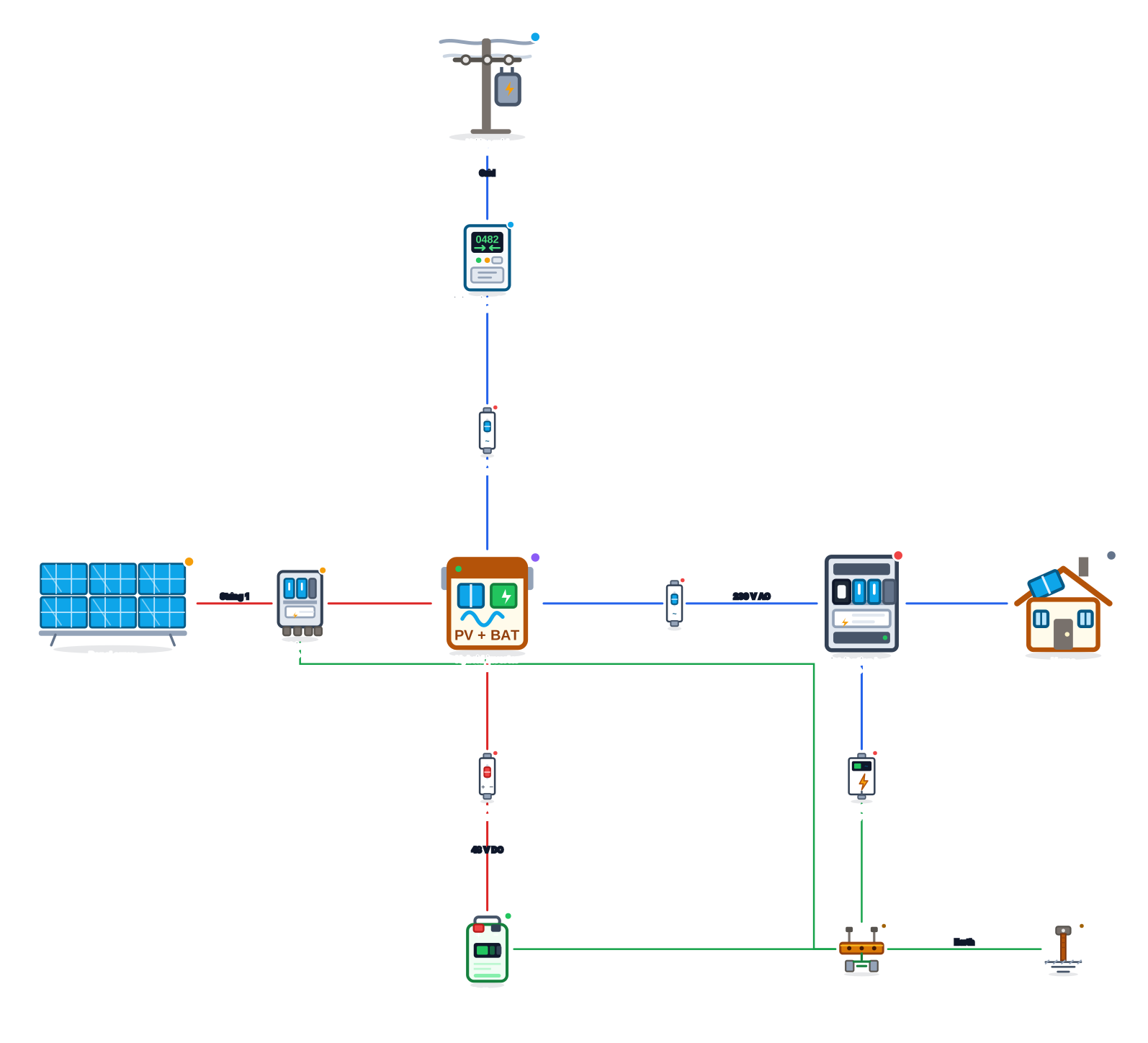
Editable hybrid system diagram: panels, utility grid and battery connected to the hybrid inverter, with backup during outages. Adapt it online.
What the diagram shows
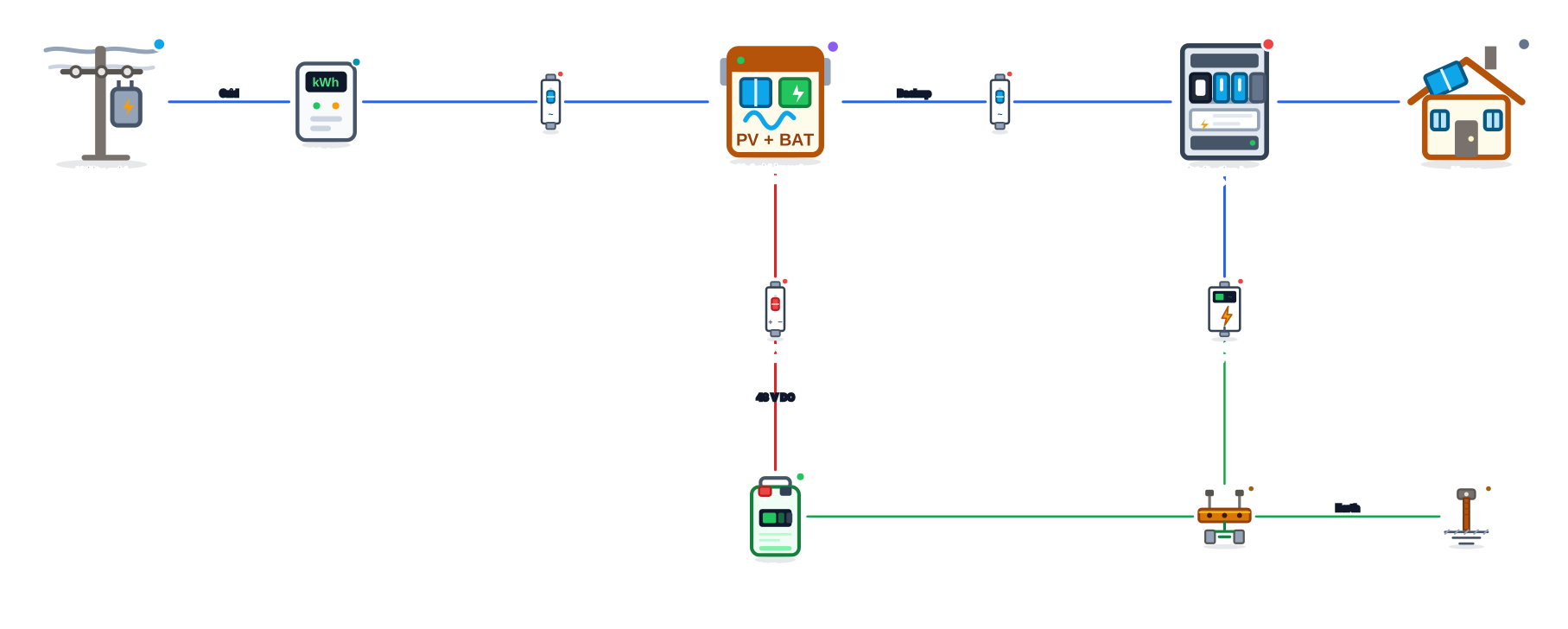
The hybrid system combines the best of on-grid and off-grid: the panels power the home, the surplus charges the battery and can be exported to the grid, and the grid remains available as a reserve. When the utility grid goes down, a hybrid inverter with a backup (EPS) function disconnects from it and keeps the backup circuits running on the panels and the battery. On some models this function requires an accessory (a backup box or transfer switch) and an installation with an essential loads circuit.
In the diagram, the hybrid inverter sits in the middle, with three connections: the panels on the left, the utility grid at the top and the battery at the bottom. The output goes to the distribution board and to the home.
Protection follows each connection: a combiner box on the panel side, an AC breaker and a bidirectional meter at the grid input, a DC breaker on the battery, an AC breaker at the output to the board and an AC SPD in the board. The equipment enclosures go to the earth busbar, connected to the earth rod.
Diagram components
- Panel arrayGroup of modules shown as a block.
- Combiner boxString combiner and protection box.
- Hybrid inverterInverter with simultaneous battery and grid support.
- 2× AC breakerBreaker for alternating-current circuits.
- Bidirectional meterBidirectional energy meter (generates and consumes).
- Utility gridConnection point to the utility.
- DC breakerBreaker for direct-current circuits.
- BatteryEnergy storage unit.
- Distribution boardSystem distribution and protection board.
- HomeResidential consumer unit.
- AC SPDSurge protector for alternating current.
- Earth busbarEarth equipotential bonding busbar.
- Earth rodEarth (ground) rod driven into the soil.
How it works, step by step
- Sun first: the energy from the panels supplies the home’s consumption first.
- Surplus: what is left over charges the battery and, depending on the settings, is exported to the grid.
- Night and expensive hours: the battery takes over the consumption, reducing the energy bought from the grid.
- Power outage: with the backup function installed, the inverter disconnects from the grid and powers the backup circuits. The changeover time comes from the datasheet: some models switch in milliseconds and others take about half a second, long enough for routers and computers to restart.
When to choose hybrid
Hybrid is recommended when power outages are a problem (home office, freezers, well pumps, automatic gates) or when the tariff varies during the day. It costs more than on-grid because of the battery and the inverter, but less than an equivalent off-grid system, because the grid remains as a reserve.
In practice, only the essential circuits are usually connected to the backup. Electric water heaters, ovens and air conditioning would drain the battery quickly. See the full comparison in on-grid, off-grid or hybrid.
Tips to adapt the diagram
- Create two boards, "Main board" and "Backup board", to make clear what stays on during an outage.
- Replace the battery with a battery bank and note the capacity in kWh in the description.
- Add a monitoring item connected to the inverter through a communication link (Wi-Fi).
- Note the inverter’s backup changeover time in its technical parameters, as stated in the datasheet.
Frequently asked questions
Does a hybrid system keep the whole home running during an outage?
It depends on the inverter power and the battery capacity. In most installations, only the essential circuits are on backup, such as lighting, outlets, the refrigerator and the internet.
Can an on-grid system become hybrid?
Yes. Usually the on-grid inverter is replaced by a hybrid one, or an AC-coupled battery inverter is added, and the battery bank is installed.
Does the battery charge from the grid?
It can, depending on the inverter settings. That is useful to make sure the battery is charged before a storm or to take advantage of cheaper tariffs at certain hours, where they exist.
Edit this template in Editor Solar
The template is already open in the editor below. Move the equipment, change labels, add protection devices and export to PNG, SVG or PDF, free and without signing up.
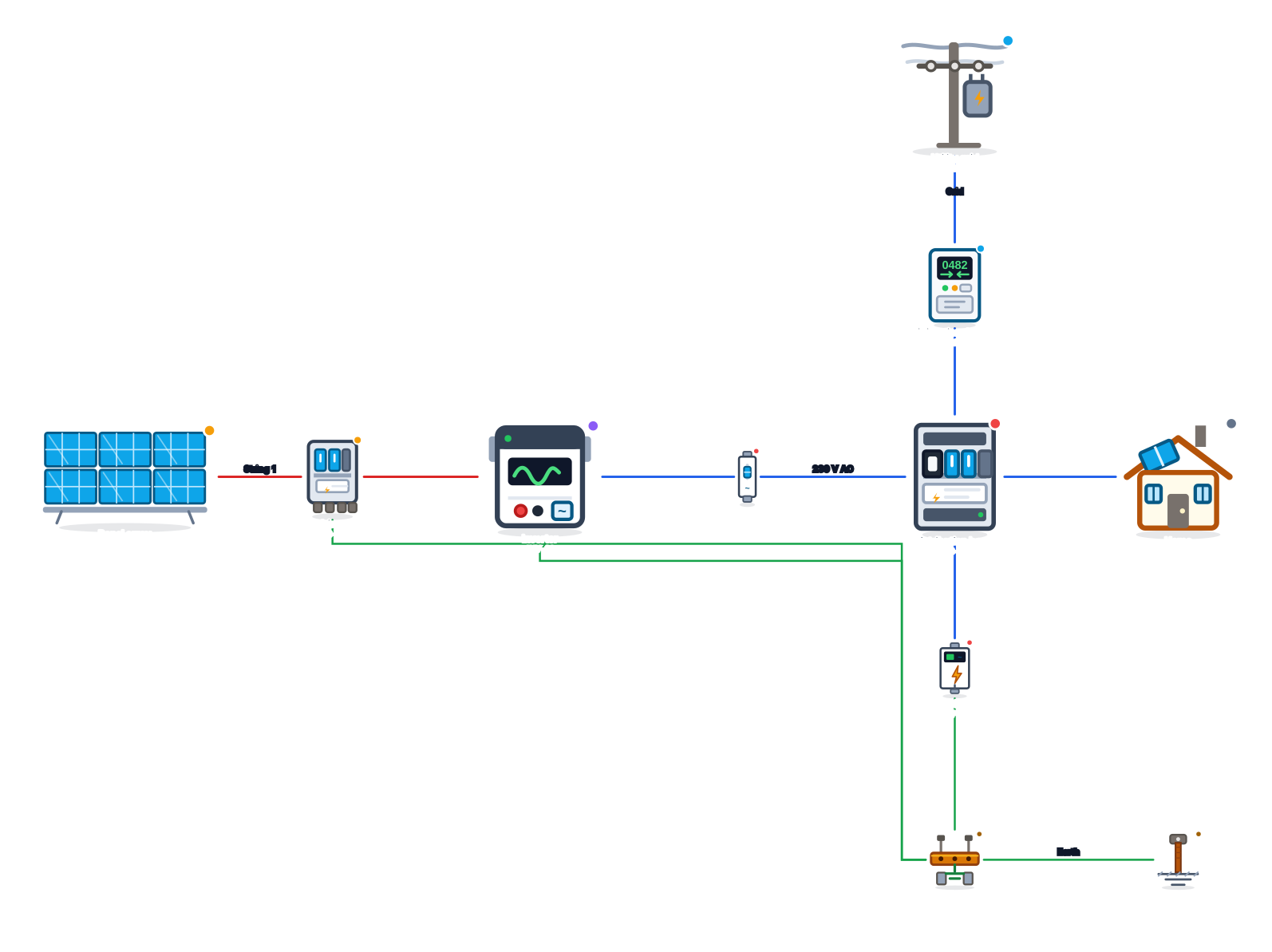 On-grid (grid-tied) solar system diagram
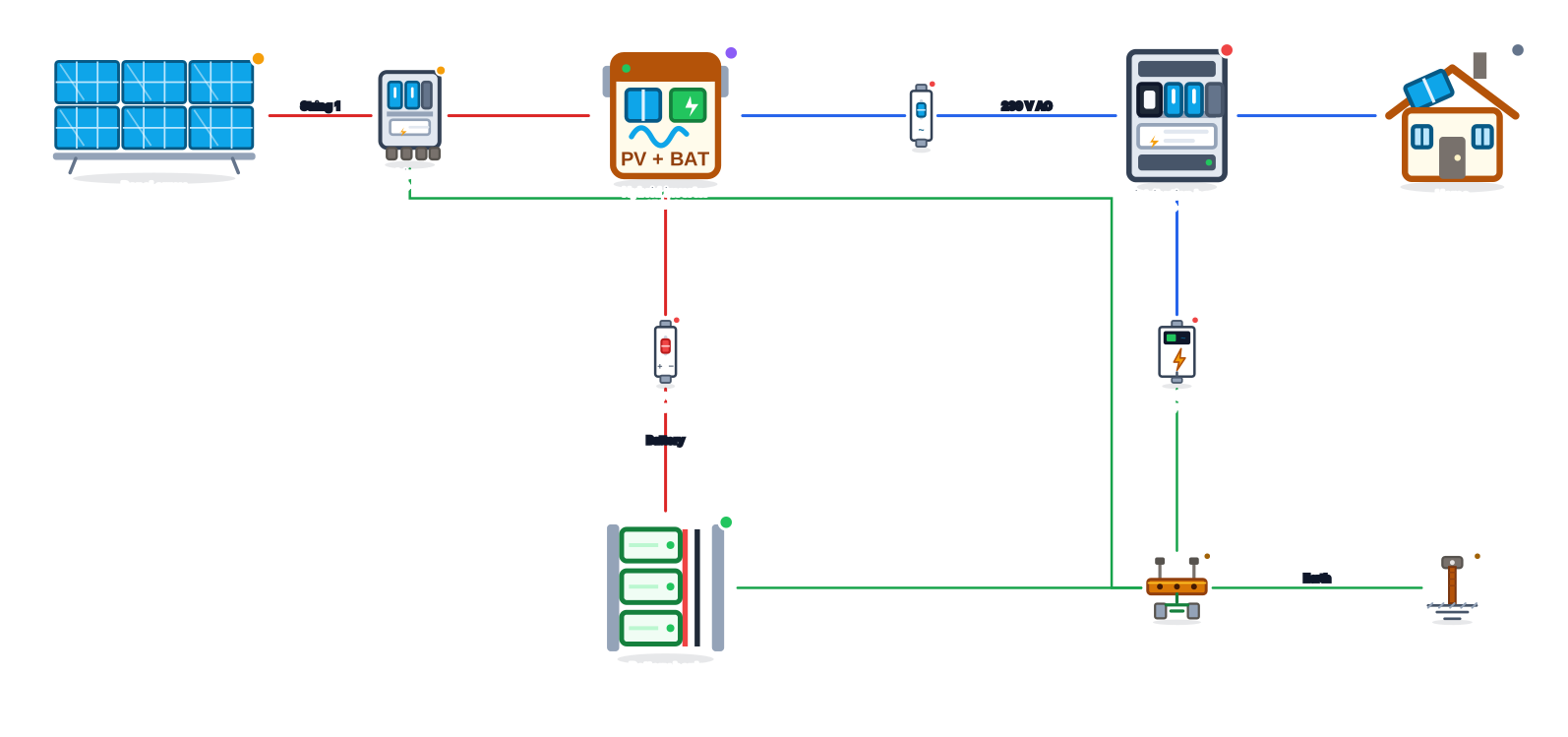 Solar system with battery diagram (no grid)
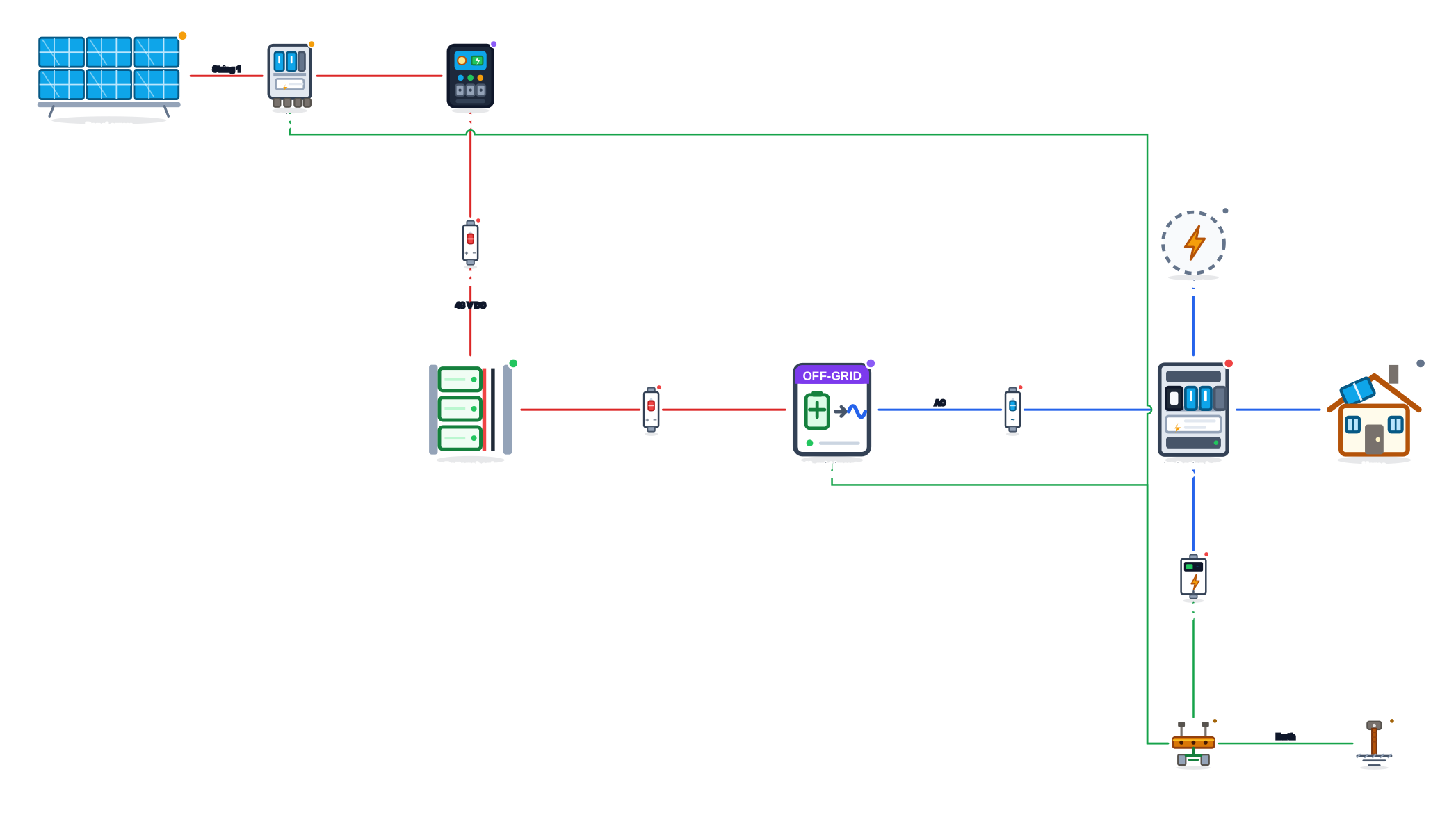 Off-grid (stand-alone) solar system diagram
 Home battery backup diagram
 On-grid diagram with microinverters
 Off-grid system with generator and ATS diagram
 Hybrid solar and wind system diagram