 Editor Solar
Off-grid system with generator and ATS diagram
Editable off-grid template with a backup generator: panels, charge controller, batteries, off-grid inverter and transfer switch (ATS). Adapt it online.
What the diagram shows
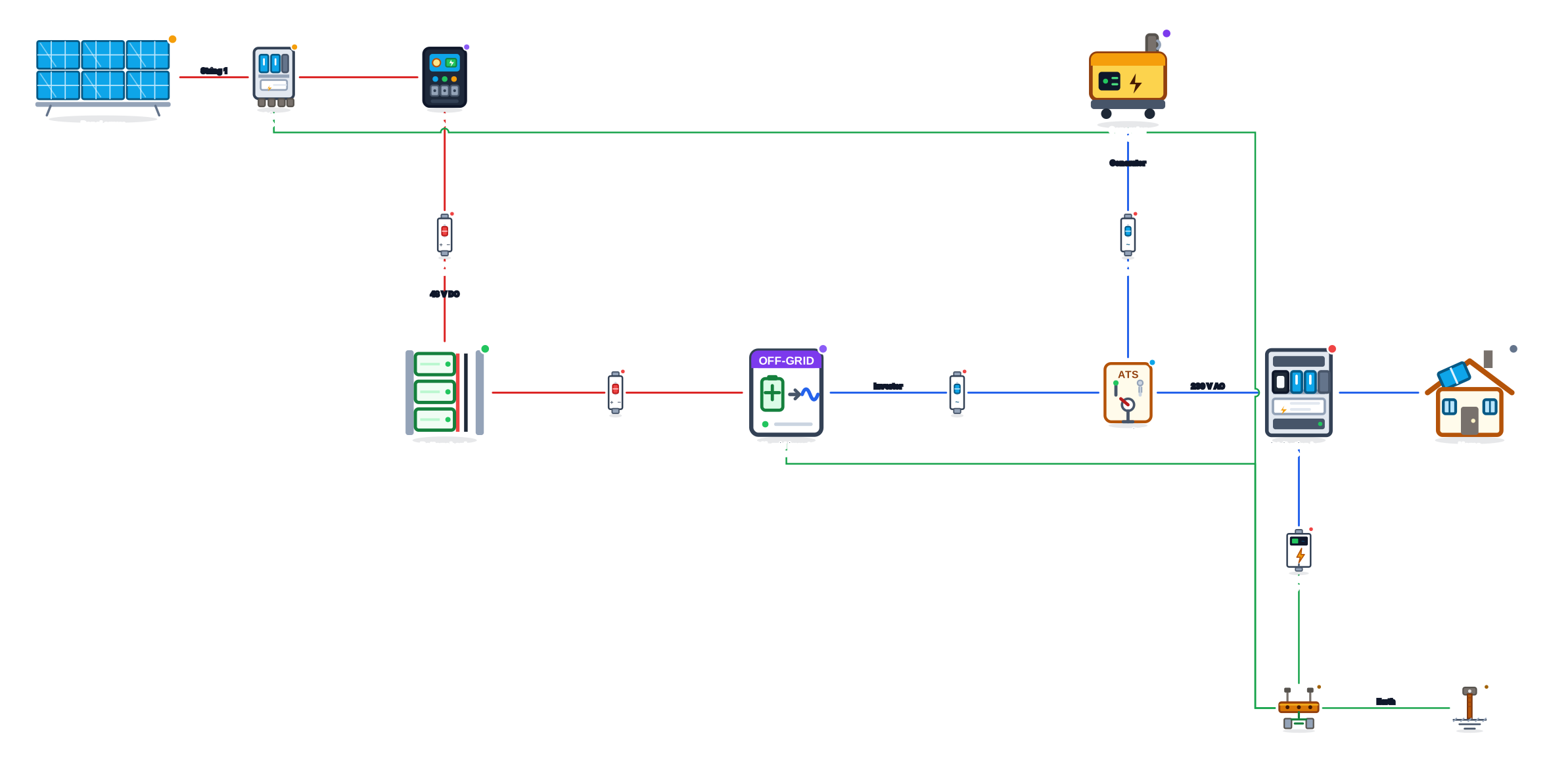
This template adds a backup generator to an off-grid system. The panels charge the batteries through the charge controller, the off-grid inverter powers the home and an automatic transfer switch (ATS) selects either the inverter or the generator as the source of the distribution board.
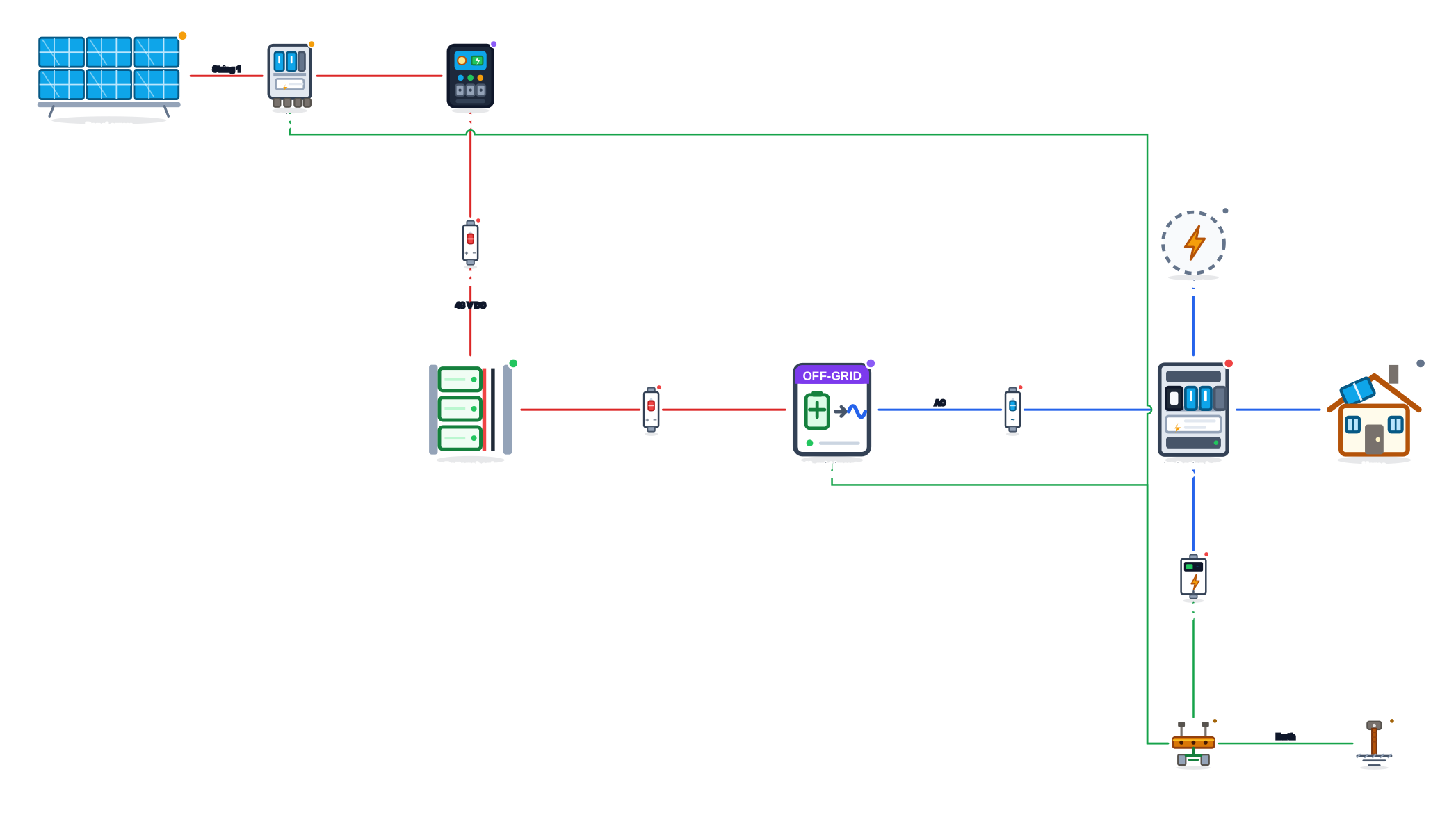
The main path is panel array → combiner box → charge controller → DC breaker → battery bank → DC breaker → off-grid inverter → AC breaker → ATS → board → home, with the generator connected to the second ATS input through its own AC breaker and the AC SPD in the board. The equipment enclosures go to the earth busbar, connected to the earth rod.
Diagram components
- Panel arrayGroup of modules shown as a block.
- Combiner boxString combiner and protection box.
- Charge controllerManages battery charging from the panels.
- 2× DC breakerBreaker for direct-current circuits.
- Battery bankSet of interconnected batteries.
- Off-grid inverterStand-alone inverter that produces AC from the batteries.
- 2× AC breakerBreaker for alternating-current circuits.
- Transfer switch / ATSAutomatic transfer between sources.
- GeneratorAuxiliary generator / genset.
- Distribution boardSystem distribution and protection board.
- HomeResidential consumer unit.
- AC SPDSurge protector for alternating current.
- Earth busbarEarth equipotential bonding busbar.
- Earth rodEarth (ground) rod driven into the soil.
How it works, step by step
- Normal operation: the home is powered by the inverter, with energy from the panels and the batteries.
- Low battery or high consumption: the generator starts, manually or automatically, and the ATS transfers the board to it.
- Recharging: in many systems, the inverter/charger itself uses the generator to recharge the batteries while it runs.
- Back to normal: once the batteries recover or the sun returns, the ATS switches the board back to the inverter and the generator stops.
When to choose this template
It is the typical setup for rural properties and remote sites with significant consumption or long seasons with little sun. The generator avoids oversizing the battery bank for the worst case, which lowers the total cost, and it works as a safety net for the unexpected.
The ATS prevents two sources from feeding the board at the same time, which would damage the equipment. To size the bank, see the tutorial on battery backup time.
Tips to adapt the template
- Connect the generator to the inverter as well (AC input) if your unit has a built-in charger, showing the battery recharge.
- The DC breaker between the bank and the off-grid inverter sits in the highest-current section: size it from the maximum discharge current stated by the inverter manufacturer.
- Note the generator and inverter power in the description of each.
- Use labels such as "Main" and "Reserve" on the two ATS inputs.
Frequently asked questions
Does the generator start by itself?
It can, if it has an electric start and an automatic start controller. In that case, the signal usually comes from the inverter or the controller when the battery reaches a minimum level.
Can I connect the generator straight to the board, without an ATS?
It is not recommended. Without a transfer switch, the generator and the inverter could feed the board at the same time and damage the equipment. The ATS ensures that only one source is connected.
Does the generator replace larger batteries?
Partly. It covers long periods without sun, allowing a smaller bank than a solar-only system would need, but it uses fuel and needs maintenance.
Edit this template in Editor Solar
The template is already open in the editor below. Move the equipment, change labels, add protection devices and export to PNG, SVG or PDF, free and without signing up.
 On-grid (grid-tied) solar system diagram
 Solar system with battery diagram (no grid)
 Hybrid inverter with battery and grid diagram
 Off-grid (stand-alone) solar system diagram
 Home battery backup diagram
 On-grid diagram with microinverters
 Hybrid solar and wind system diagram